Context

Support behaviour change among citizens and organisations through the use of ocean science
1.Address the impacts of cities on the ocean.
2. Increase city resilience to ocean-related impacts of climate change.

Opportunity

Fatbergs occur in sewer systems clogging the drain and causing flooding in Lambeth

Proposal

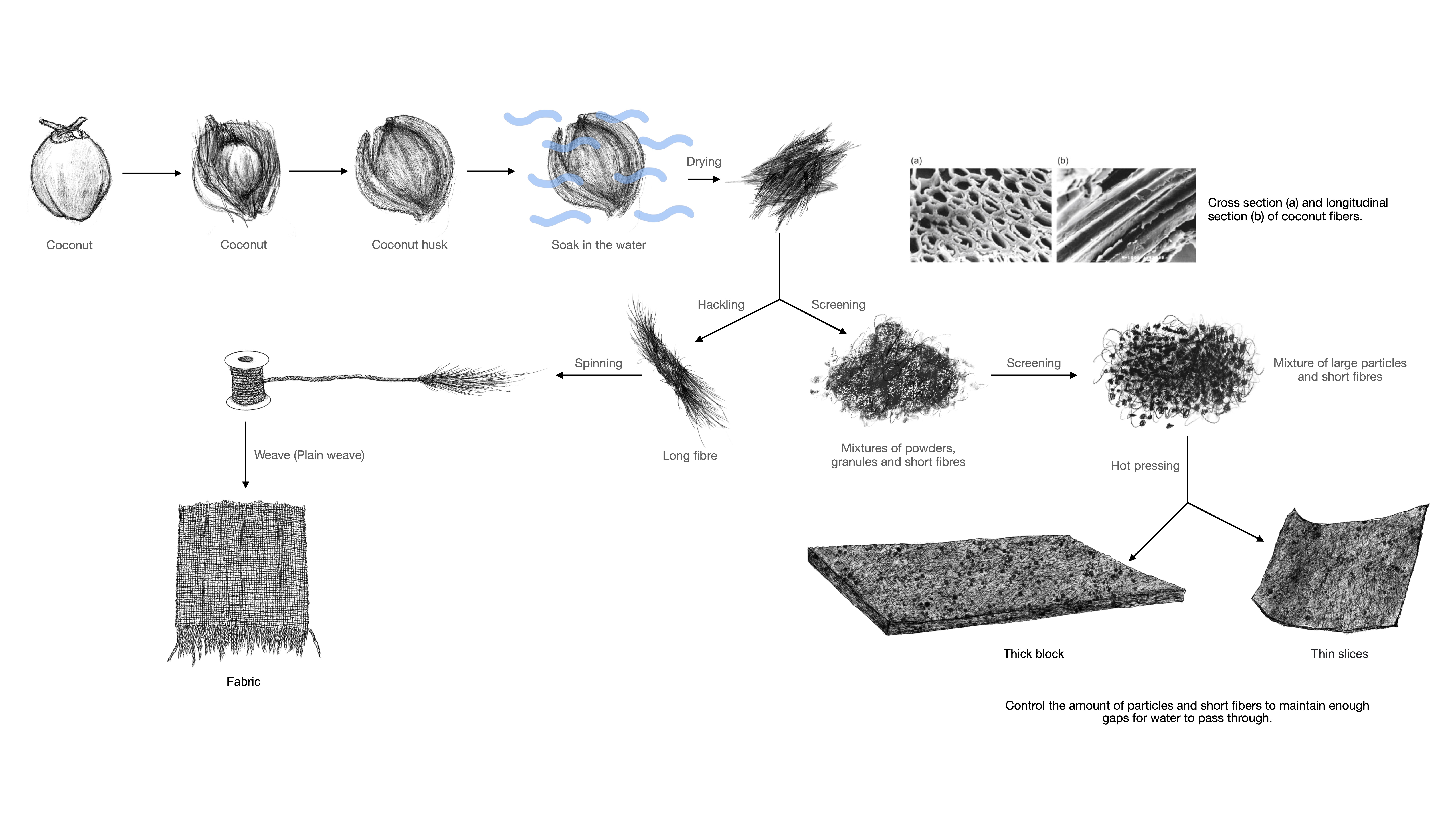
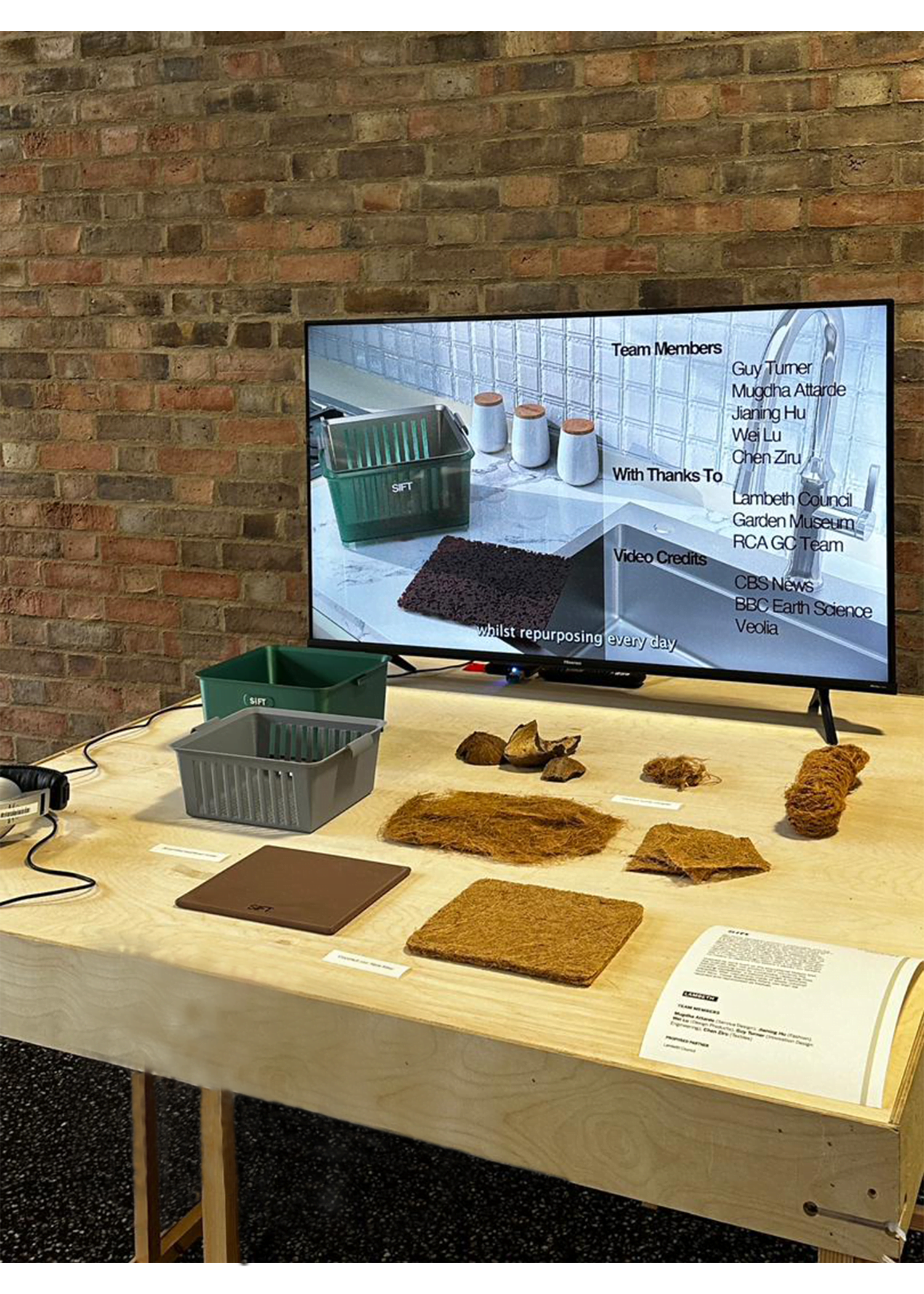
SIFT reinvents the kitchen washing bowl for residential users to prevent fatberg formation by capturing oil.It has three parts,Filter to capture small food debris, sustainable oleophilic filter membrane made of waste coconut husk fibre to absorb oil and not water and vessel to hold above two parts and attach to sink .Through the filtration and capture of oil & fat dense grey water from cooking waste,ongoing £1 million monthly maintained costs to Thames Water can be reduced, and captured and coconut can be repurposed as biofuel.

Achievement

Our team got selected as one of the top 13 teams.Our project was displayed at museu de Ciencies Naturals de Barcelona for UNESCO Ocean Decade Conference and was interviewed by BBC Warwick

Role

I took a proactive approach to understand the root cause of fatberg formation & ways to prevent it.I played a pivotal role in crafting a design brief by identifying target users, thought about product’s lifecycle ,accessibility and seamless integration into daily rituals.Through thorough research and consultations, I identified materials that absorb oil without water, prioritising user-friendly application and availability. I also led the creation of an impactful storyboard and shaped the narrative for our project video.

Group Members- Mugdha Attarde, Ziru Chen, Wei Lu, Guy Turner, Jianing Hu
Timeline- 27 Sept 2023 - 02 Feb 2024
Client - UNESCO & London Borough of Lambeth
Mentor-Richard Atkinson & Flora McLean  

Introduction

In the bustling borough of Lambeth, a group of students embarked on an interdisciplinary journey within the School of Design which is the biggest single-institution postgraduate design project in the world.
Their mission? To harness the power of design in tackling the pressing issues surrounding our beloved oceans
Assigned to Lambeth, our intrepid team delved deep into the heart of the borough, eager to uncover its unique challenges and opportunities. As they explored, they stumbled upon a troubling reality
the growing desire for a riverside view juxtaposed with the grim reality of sewage and storm outflows tarnishing the waters , exacerbated by frequent flooding.

Undeterred, they pressed on, conducting thorough research and on-the-ground observations. From Uber boats emitting noxious fumes to fungi adorning guardrails and maintenance pipes lining the waterfront, they witnessed firsthand the myriad issues plaguing Lambeth's waterways.

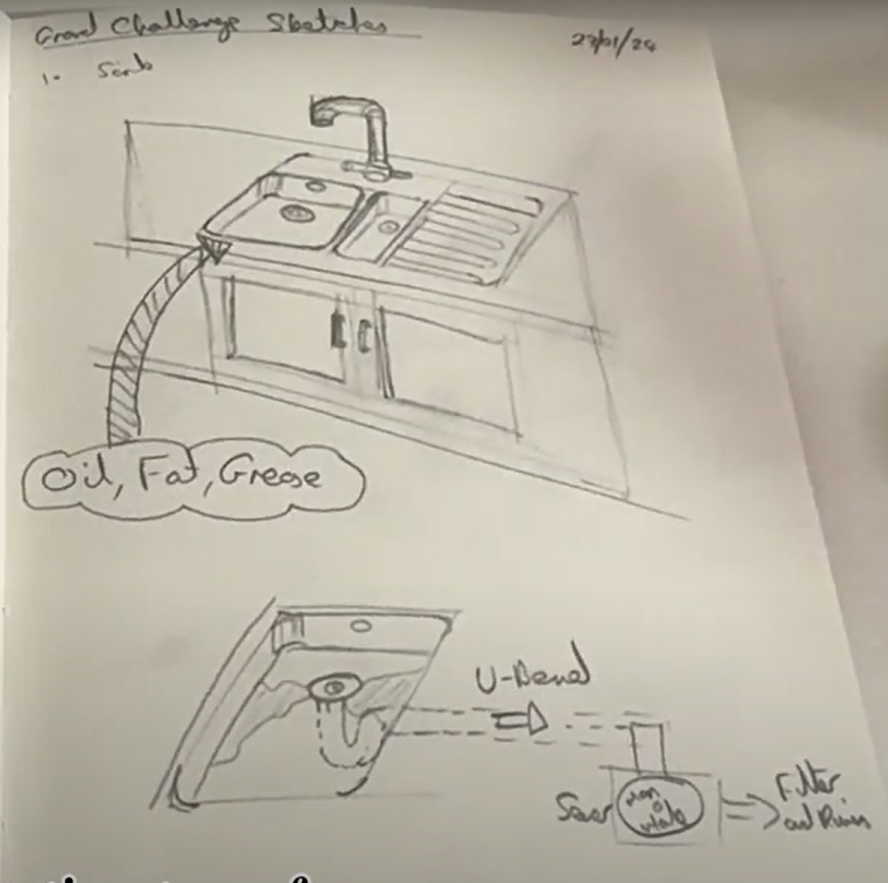
Their investigations led them to a revelation : the insidious presence of fatbergs lurking beneath the surface. These monstrous conglomerates of waste threatened to choke the borough's drainage systems,fueled by a lethal combination of non-biodegradable solids and grease.
The team realized that the only effective prevention method was the use of residential grease traps. However, while mandated for restaurants, such measures were sorely lacking at the residential level.

With new found insight, the team faced a pivotal decision for their Design brief

1.Do we want to do something for prevention of Fatberg or do we want to design something from existing fatberg?

2.Do we want to design a product or create awareness aboutfatberg?

3.If product,how we want our product to be? Will the productbe a part of their daily ritual? Will our product be easily available?

4.Who are target user group? Do we want to target small scale or large scale?

Together, we resolved to craft a solution and contemplated the following query:

How might we stop drains from getting clogged by fatbergs formed by the accumulation of oil disposed of down residential drains?

We took this challenge and brainstormed solutions to this problem, took time to understand our users, and approached this with design thinking.  We began with physical prototypes, using 3D printing to create mockups of kitchen sinks and wash bowls.

Then we researched about the materials which can absorb oil but not water such as wooden Sponge material, Foamed material For oil water seperation, sponge from seaweed & Using chitosan derived from crustacean shell. We built some materials to experiment like foam .

View our research

We decided to proceed with coconut because its available easily & its sustainable 

Coconut coir

Done by Ziru

Our Creation,

SIFT reinvents the kitchen washing bowl for residential users by sustainably capturing FOG. Cooking wastewater is passed through a oleophilic filter membrane made of waste coconut husk fibre. These disposable filters can then be recycled and repurposed as biofuels.

Our Learnings

View Other projects